
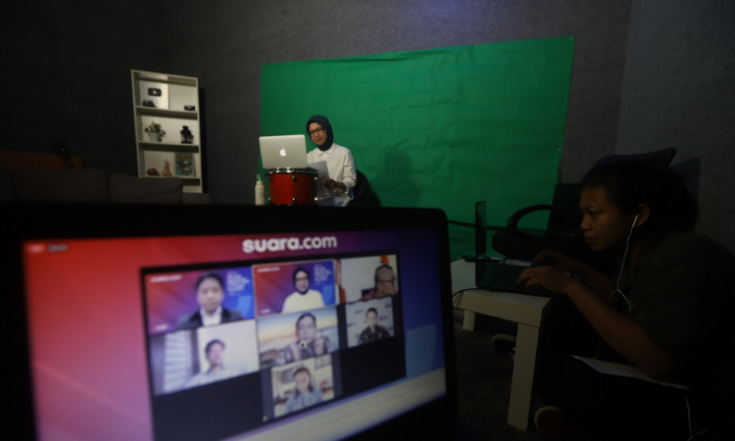
Suara is an Indonesian digital media outlet with strong local coverage, reaching audiences across the country through 20 regional offices.
In August 2025, widespread protests broke out after motorcycle taxi driver Affan Kurniawan was killed by Indonesian National Police’s armoured vehicle. Initially directed at the perceived arrogance and ostentatious displays of wealth among public officials, the protests soon expanded to condemn police brutality.
Through a series of long-form investigations, Suara documented the human cost of the unrest. Its reporting exposed arbitrary mass arrests, abuse in custody, intimidation of families and the challenges victims faced in seeking justice.
The work
Suara’s reporting followed young Indonesians caught up in police action after the protests.
In North Jakarta, it documented the cases of Ardi and Anto, who were detained after being near protest sites. One of them was found with a bruised face, blood dripping from his nose, and injuries around his temple and lips. Another told his mother that police had beaten him with batons. He said two of his fingers were broken when he raised his hand to protect himself.
In Magelang, a city in Central Java, Suara told the story of Dion and Doni, two teenagers who did not know each other and said they had not attended the protests. Both were arrested at different places but allegedly tortured in the same police custody. This investigation described beatings with plastic hoses, kicks, verbal humiliation, denial of adequate food and water, and threats intended to prevent detainees from speaking about the abuse.
Suara also reported that LBH Yogyakarta, a civil society organization that provides legal aid to low-income and vulnerable groups, identified 14 children caught up in the police sweep. Of those, 13 said they had not participated in the demonstrations.
The outlet also followed the case of Laras Faizati Khairunnisa, who was arrested after posting critical comments about police brutality on social media.
The Impact
The investigations provided families with a public record of what had happened inside police facilities, including injuries, threats and pressure to remain silent.
The articles also documented accountability efforts already underway. Supported by legal aid organizations such as LBH Yogyakarta, families filed complaints with regional police and sought support from state institutions. These included the National Commission on Human Rights (Komnas HAM), the Indonesian Child Protection Commission (KPAI), the Witness and Victim Protection Agency (LPSK), and the Ombudsman. Alongside the efforts of civil society organizations and legal advocates, Suara’s reporting helped sustain public attention on the cases, eventually leading to Magelang City Police Chief AKBP Anita Indah Setyaningrum, whose name had been mentioned most by the arrested teens, being transferred from her position.