
United Nations Human Rights Day, observed each year on December 10, marks the anniversary of the adoption of the Universal Declaration of Human Rights in 1948, a milestone document that sets out the fundamental rights and freedoms to which all people are entitled.
Among these, freedom of expression stands as a cornerstone. It is the right that enables all others: without the ability to speak freely, access independent information and challenge those in power, efforts to claim justice, equality and dignity are stifled. Without freedom of expression, all other rights are weakened.
This fundamental freedom is enshrined in Article 19 of the Universal Declaration of Human Rights, which affirms the right of every individual to “seek, receive and impart information and ideas through any media and regardless of frontiers”. It is a safeguard for dignity, equality and justice – protecting space for dissent, accountability and democratic debate.
Yet in many parts of the world, freedom of expression is under sustained attack. Independent media are outlawed, harassed, silenced or bought out; journalists face censorship, violence and imprisonment simply for doing their jobs. On Human Rights Day, we honour the courage of those who continue to report the truth under repressive regimes and draw attention to the cost of silencing them.
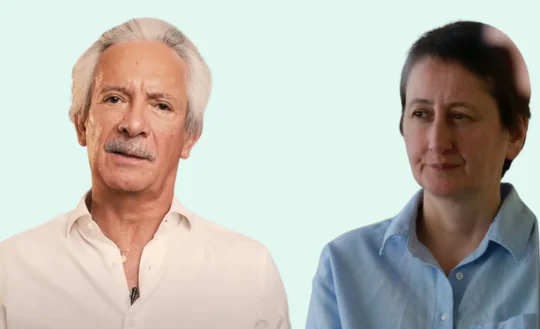
Journalists are imprisoned in dozens of countries around the world. Today we would like to highlight the case of two with whom we have worked closely for many years and whose release we continue to call for: José Rubén Zamora in Guatemala and Mzia Amoglobeli in Georgia.
José Rubén Zamora: 1,230 days in jail and counting
José Rubén Zamora is one of Guatemala’s most respected investigative journalists. Over a decades-long career, he has founded several newspapers – most notably El Periódico, a former MDIF client – and built a reputation for fearless coverage of corruption, human rights abuses and political wrongdoing. His work earned him multiple international awards and made him a leading voice for accountability and press freedom in Guatemala and across Latin America. It also made him a bitter enemy of the elite that have wielded power in Guatemala overtly and covertly for decades.
On 29 July 2022, authorities arrested and detained José Rubén on charges including money laundering, influence peddling and blackmail – allegations widely viewed as retaliation for his investigative reporting on corruption within the government and its allies. In June 2023, a tribunal sentenced him to six years in prison for money laundering, in a process widely condemned as politically motivated.
The case has been littered with serious irregularities: delays to hearings, denial of legal guarantees, persecution of his lawyers and evidence that criminal‑justice processes were deployed to silence him.
José Rubén remains in jail, held in harsh conditions at the Mariscal Zavala prison, with ongoing trials and little prospect that he will receive a fair retrial. His detention continues to draw condemnation from international human‑rights and press‑freedom organisations.
José Rubén’s case is a stark reminder that exposing corruption and holding power to account is, in effect, an imprisonable offence in Guatemala and many parts of the world.
Mzia Amaglobeli:
“My fellow journalists are putting their lives in danger every day, but we refuse to surrender to a regime that threatens Europe’s own security.” Writing from prison, with her eyesight deteriorating rapidly, Georgian journalist Mzia Amaglobeli captured both the cost of her work and the state of her country’s democracy.
Mzia, founder of independent outlets Batumelebi and Netgazeti – a former MDIF client – was arrested and imprisoned in Batumi on January 12, 2025 after a dispute, which included being detained and threatened, she slapped the city’s police chief. In August, a court sentenced her to two years in prison for “resistance, threat, or violence” against an official. According to local and international rights groups, the charge and pretrial detention are legally unjustified and in retaliation for her outlets’ reporting.
Mzia is the first woman journalist jailed in Georgia since independence in 1991. “For the past eight months, this has been my life under Georgia’s repressive regime: one that seeks to silence journalists, erase dissent and break our spirit,” she wrote in The Guardian.
Her case reflects a wider decline in media freedom in Georgia as the pro-European population faces an increasingly authoritarian, pro-Russian government. Authorities have adopted restrictive laws targeting the press, while police impunity for attacks on journalists persists.
But instead of silencing her, the political prosecution of Mzia is ensuring that her work resonates far beyond her cell. In October, backed by 66 Members of the European Parliament she was nominated for the 2025 Sakharov Prize. Days later, the European Parliament named her the 2025 Sakharov Prize laureate, alongside Polish/Belarusian journalist Andrzej Poczobut.
Although the Kutaisi Court of Appeals recently upheld the verdict that sentenced Mzia to two years in prison, local and international efforts to secure her release continue to grow, recognizing the universality of the values she represents: integrity, accountability and a refusal to be silenced.