
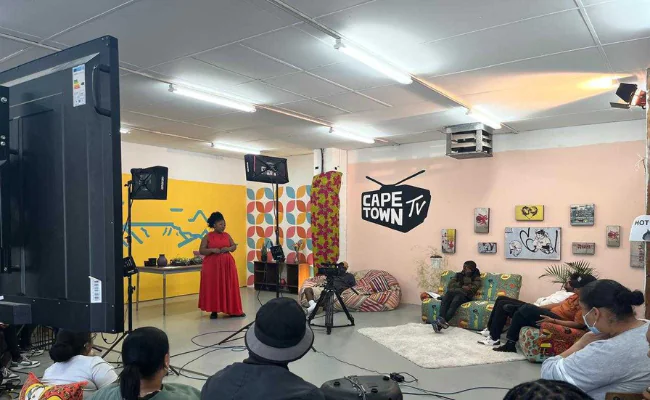
At Cape Town TV, the newsroom is more than just a place where stories are produced. It is a space where young journalists are trained, mentored and prepared for leadership.
Broadcasting to more than 2.3 million viewers, the station has long focused on serving underserved communities. Its flagship bulletin, Cape Town Daily, covers stories that reflect the realities of working-class audiences, issues like service delivery, housing, public safety and the rising cost of living.
At the heart of this work is a youth-driven newsroom.
A large part of Cape Town TV’s team is made up of interns, volunteers and early-career journalists. This is one of its biggest strengths. Young reporters bring fresh perspectives, strong connections to community issues and a natural understanding of digital platforms. They are not just creating content; they help reshape how local news is told and shared.
However, this model also comes with challenges. Many team members need on-the-job training, mentorship and structured support to build confidence and editorial skills. Senior staff often take on multiple roles, balancing leadership, production and training in a resource-constrained environment.
Cape Town TV has responded by making talent development central to its strategy.
Each year, the station brings in around 30 interns and volunteers, offering hands-on experience across journalism, production, editing and digital content creation. Working in a live broadcast environment, these young professionals gain practical skills that prepare them for long-term careers in media.
A key strength of this model is its focus on progression. Many of the station’s current leaders started as interns, creating a clear pathway from learning to leadership. A participatory management culture ensures that young staff are not only trained, but also actively involved in shaping editorial and strategic decisions.
Support from Amplify South Africa has helped strengthen this approach.
Through targeted interventions, the newsroom is improving editorial quality, streamlining workflows and building more sustainable systems. This includes mentorship for the news team, investment in roles like social media coordination and efforts to free up senior editors to focus on strategy rather than daily production pressures.
One of the most important shifts has been toward a stronger digital strategy. As younger audiences increasingly consume news online, Cape Town TV is expanding its presence on platforms like TikTok, WhatsApp, and Facebook. The aim is not just to distribute content, but to engage audiences, using digital tools to source stories, test formats and build more interactive relationships.
This shift is already shaping how content is produced. There is a growing focus on shorter, more relatable formats, stronger storytelling hooks and real-time audience feedback. Partnerships with other media organizations are also helping bring in higher-quality feature content and broaden perspectives.
Beyond the newsroom, Cape Town TV is investing in the wider creative ecosystem. Through initiatives like the Producer Development Program, the station supports emerging content creators to develop, distribute and monetize their work, extending its impact beyond its own team.
The result is a newsroom that is constantly learning and evolving.
Cape Town TV’s experience highlights an important lesson for youth-driven media in South Africa. Investing in young talent takes time, mentorship and the right systems. But when done well, it creates a newsroom that is dynamic, community-focused and future-ready.
In a rapidly changing media landscape, Cape Town TV shows that sustainability is not only about revenue or reach. It is also about people—building the next generation of journalists who can tell meaningful stories in ways that connect with the audiences they serve.